
OSI and TCP IP Model: Key Differences, Layers, and Comparison
Updated Published by Kishan Prajapat, SEO & Content Lead
Drafted with Citeya, an AI writing tool built by KPThink.
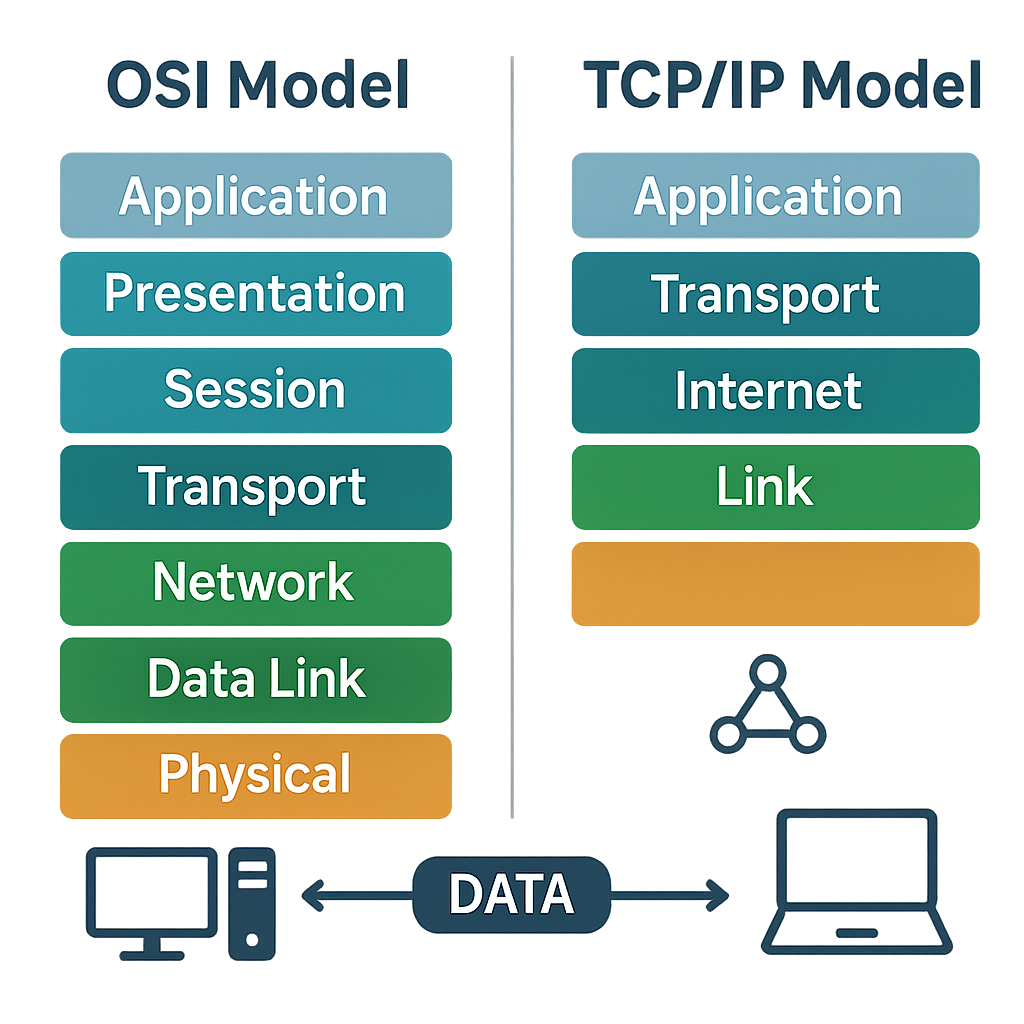
Let's get real: even though they overlap, OSI's seven layers and TCP/IP's four layers actually play different roles in how networks are designed and run. These frameworks literally built the internet's plumbing. This article breaks down those differences to clear up what goes on under the hood.
If you're serious about cybersecurity or managing networks, knowing OSI and TCP IP Model stuff is a must. TCP/IP is what you'll find in real-world networks, but OSI still holds the crown when it comes to learning protocol design and troubleshooting. According to TechTarget, understanding what each model is for can save you from common goofs that open security holes TechTarget 1.
Breaking Down the OSI and TCP IP Model Layers
The OSI model has seven layers lined up: Physical, Data Link, Network, Transport, Session, Presentation, and Application. Each one handles a specific job—from just managing raw bits on cables all the way up to shaping how data looks for users. Even though it's mostly theoretical, that setup is super handy for untangling tricky problems.
TCP/IP keeps things simpler with just four layers: Link, Internet, Transport, and Application. It squashes some duties together—the physical and data link stuff merge at the Link layer, and the top three layers from OSI kind of fold into TCP/IP’s Application layer.
Take HTTPS traffic during a web session. In OSI, encryption is tackled straight-up at the Presentation layer, but with TCP/IP, it’s bundled into the Application layer. That’s why TCP/IP feels more flexible, though sometimes it glosses over details. The Internet Engineering Task Force (IETF) lays down the official TCP/IP protocols in RFC docs, which is a big deal in the networking world TechTarget 2.
Core Differences Between OSI and TCP IP Model
Knowing the backstory helps spot the contrasts. OSI came from ISO wanting a universal network blueprint, built with clean-cut layers and clear duties. TCP/IP, by contrast, grew out of practical work for the US Department of Defense and ended up focused on getting the internet booming instead of looking neat academically.
People often knock OSI for being too theoretical and slow to change. TCP/IP’s no-frills design moves packets fast but skips the details like separating connection handling (Session layer) and data formatting (Presentation layer).
It’s a common mistake to think OSI is the real protocol stack—it’s more for teaching, while TCP/IP is what actually runs the internet. Cisco pros remind new engineers not to mix them up or risk bad network setups GeeksforGeeks 3.
The Truth About Their Practical Use in Networks
You won’t see OSI layers literally hard-coded in modern networks, but the model’s impact is everywhere. For example, firewall setups and encryption protocols often look to OSI layers to help isolate threats.
Meanwhile, TCP/IP handles the real traffic—from your laptop loading a webpage to streaming videos. It’s simple, scalable, and it’s the protocol suite the internet itself runs on.
Honestly, I see a lot of network engineers using OSI as a mental checklist, while TCP/IP gets rolled out everywhere—Android phones, web servers, IoT gadgets. TCP/IP is pretty much the internet’s beating heart.
Emerging Trends and the Future of OSI and TCP IP Model
The networking scene is moving fast with cloud computing, 5G, and edge devices pushing for smarter protocols.
But here’s the snag: TCP/IP can struggle with some new demands like super low latency and rock-solid security right out of the box.
New stuff like QUIC and HTTP/3 are trying to update transport-layer protocols, stepping past classic TCP’s limits. This hints that TCP/IP might need tweaking down the road. Still, OSI’s clear-cut way of thinking keeps guiding new standards and helps security pros sort out data for threat hunting.
My take? The borders between these layers will blur as things get more flexible. Still, OSI's layered mindset will be your go-to for unraveling complicated network messes, while TCP/IP sticks around as the handyman that keeps things running.
Frequently Asked Questions
Q1: Why do we still study OSI if TCP/IP is used in practice?
OSI breaks down network functions in a straightforward way, making it great for learning and fixing problems, even though actual communication runs on TCP/IP GeeksforGeeks 4.
Q2: Can TCP/IP work without OSI model concepts?
Technically yes. TCP/IP can do its thing on its own, but OSI helps you picture how protocols and network issues fit together. Think of OSI like a map you use while navigating a complicated city.
Q3: What is a common misconception about the OSI and TCP IP Model?
Lots of folks think OSI is the actual stack networks run on, but that’s wrong. OSI is mainly a theory, while TCP/IP is the real deal driving the internet Difference Wiki 5.
Here’s a tip: next time you’re setting up a network device or troubleshooting a connection, keep both models in mind. Let OSI layers shape your thinking, and use TCP/IP to track the packet’s journey. That’s how you dodge endless configuration headaches.
For live DNS info tied to TCP/IP, check out IPDekho's DNS Explained, or try their IP Lookup tool to see TCP/IP working in real time.
Spotted a mistake? Tell usand we'll correct it.
Related Articles

Network IP Ranges and Blocks Explained
Discover how network IP ranges and blocks work, why they're essential for cybersecurity, and real-world examples to help you manage your network better.

Proxy Networks and WAN Security: Risks and Precautions
Understand how a proxy approach works and why you need to be cautious when using proxy services. Learn from real-world examples and protect your data.

Public IP Security: A Practical Network Security Guide
Master public IP security with the latest trends, expert insights, and practical steps to protect your digital world in 2026.

What Is a Public IP Address? How to Find and Protect Yours
What a public IP address is, why it matters for privacy and security, and how to find and protect yours.