Gov. Newsom wraps California term by enacting 11 measures affecting technology and AI
Published by Kishan Prajapat, SEO & Content Lead
Drafted with Citeya, an AI writing tool built by KPThink.
Gov. Newsom signed 11 technology- and AI-related measures at the end of his term that tighten transparency, consumer protections, and data handling. Businesses should audit systems, update disclosures, and budget for compliance costs.
California's final package includes measures that change disclosure requirements, data access and portability, oversight of automated decision systems, and incentives for privacy-preserving research. The set of laws narrows what companies can claim about automated systems, raises expectations for audit trails, and creates new obligations for consumer notifications. These changes will affect startups, platform operators, research institutions, and everyday consumers.
What the 11 measures do in plain language
Collectively, the measures tighten rules in four clusters: transparency and labeling for automated decision systems; data rights and portability; new enforcement or reporting duties for companies that deploy AI; and limited state support for data-sharing projects under stricter privacy rules. Some bills add specific notice requirements to consumers when an algorithm meaningfully affects access to services. Others require companies to document training data provenance and to retain audit logs for a specified period. A few create pilot programs for state agencies to use privacy-preserving techniques in public services.
Why the timing matters and the political context
Signing the bills at the end of the term accelerates their timetable because implementation deadlines fall inside the state’s administrative calendar. That compresses the window for agencies to issue implementing regulations before enforcement begins. The moves reflect growing public and legislative concern about opaque automated decisions after high-profile incidents in hiring, lending, and content moderation across the last several years.
How these measures affect businesses, researchers, and consumers
Businesses will face new compliance tasks. Legal and engineering teams must map which products use automated decision systems, where training data came from, and how to present consumer-facing notices. Research teams that run models on third-party data will likely need to document data provenance and demonstrate steps taken to limit re-identification risks. Consumers should see clearer notices and easier paths to request human review or appeal when an automated system influences outcomes like loan eligibility, hiring, or benefits access.
Budget and staffing impacts are immediate. For small teams, adding data inventory, logging, and notification systems can cost time and money. For larger organizations, the bills create recurring compliance, legal, and audit costs that may require creating or expanding governance units.
A concrete example: a startup adjusting to new disclosure and data rules
A fintech startup that uses machine learning to score small-business loan applicants will likely need to do three things. First, add a visible consumer notice explaining the use of automated scoring and the primary factors considered. Second, retain model training logs and data provenance records for the retention period required by the new law. Third, add an appeal or human-review path and track outcomes to supply regulators on request. That work takes developers, legal counsel, and operations staff; for a small business, the first-year cost can be significant and must be reflected in pricing or fundraising strategies.
Trade-offs: innovation versus safety and compliance cost
Tighter rules improve accountability and may reduce algorithmic harms. But they also raise compliance costs and slow time to market. Requiring provenance and logging makes it harder to move quickly on experimental models. Requiring disclosures may deter some product designs that rely on opacity to protect intellectual property. Policymakers chose to accept some friction in exchange for consumer safeguards. Organizations must decide whether to redesign products to minimize regulated exposures or to invest in compliance and continue current strategies.
Three steps organizations should take now
Start an inventory. Map models, data sources, data flows, and consumer touchpoints where algorithms influence decisions. This inventory becomes the backbone of compliance.
Update disclosure and process flows. Add consumer-facing notices where required, and build a documented human-review process for appeals. Make the appeal path testable and auditable.
Establish retention and audit practices. Decide what logs, provenance records, and documentation you will retain and for how long. Assign responsibility for responding to regulator or consumer information requests and budget for that capacity.
Run a 30-minute internal review to flag any uses of automated decision-making that determine eligibility, pricing, or content delivery. Documenting even a preliminary list helps prioritize deeper audits and budget requests.
Caveats and open questions about enforcement and federal law
The bills increase state-level obligations, but enforcement details often rest with administrative agencies that must issue implementing regulations. Precise rules, compliance windows, and penalties may shift after agencies publish guidance. Federal preemption questions remain unsettled. If future federal legislation covers the same subject areas, changes could create overlapping or conflicting requirements. Organizations should track both state implementing rules and any federal proposals that might affect the same topics.
Another caveat is that the new laws rely on definitions that will be legally tested. What counts as an automated decision system, or as meaningful consumer harm, may be litigated. Early enforcement actions and court decisions will shape practical compliance norms.
A before-and-after benchmark
Before these enactments, companies often relied on voluntary disclosure and industry best practices. After the bills take effect, disclosure and recordkeeping will be mandatory for certain systems, and failure to comply will expose organizations to administrative or civil penalties. That change moves the landscape from recommended caution to enforceable obligations.
Practical takeaway you can act on immediately
If you run or work for an organization that builds or deploys models, start with a documented inventory of algorithmic uses and a 30-minute risk triage this week. That inventory should identify customer-facing decision points, data sources, and whether a human-review path exists. Use that list to scope the compliance time and budget you will need before the new rules take effect.
Meta description
A concise review of the 11 technology and AI measures Gov. Newsom enacted at the end of his term, what they require, who must comply, and three immediate steps organizations should take.
Image prompts
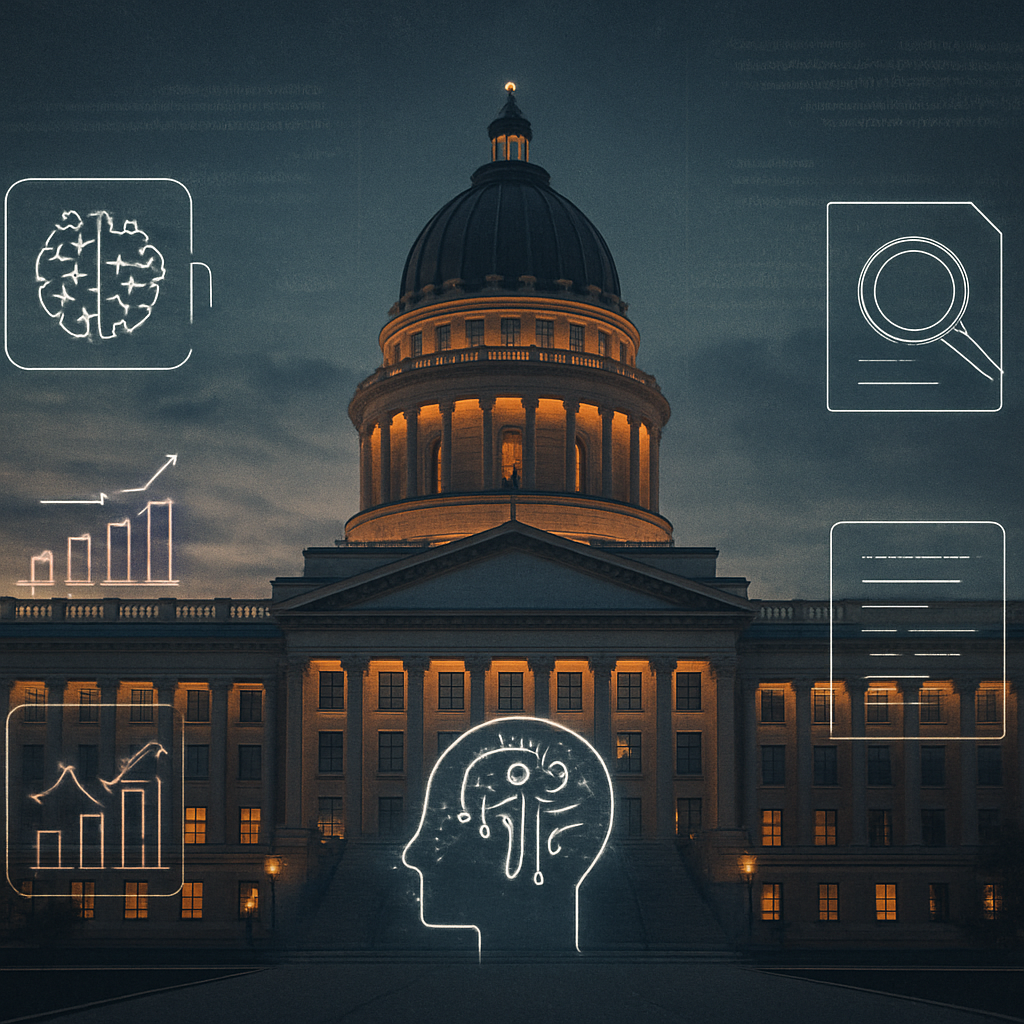
1) A state capitol building at dusk with digital overlay icons representing AI, data, and transparency. The image should be cinematic, slightly desaturated, and include subtle textural elements suggesting legal documents and code. High resolution, wide aspect ratio.
2) A team meeting in a modern office where diverse engineers and legal staff point at a whiteboard labeled "AI inventory". Include sticky notes, laptop screens showing code, and a printed notice template pinned to the board. Natural lighting, candid photojournalistic style.
Spotted a mistake? Tell usand we'll correct it.
Related Articles

'AI or bust:' Tech trade powered stocks through vo
How AI-driven optimism pushed tech and infrastructure stocks, the trade-offs investors face, a concrete example with Nvidia and data‑centre suppliers, and one practical step you can take now.

New study says AI has 'pain signals', researchers
Explains a recent paper claiming AI systems produce 'pain signals', why researchers use that phrase, practical implications, trade-offs, a concrete example, and steps readers can take now.

Government AI Models Advancing, Increasing Product: How Public AI Programs Are Changing Outcomes
A clear look at how government-backed AI models are raising productivity, the policy trade-offs they create, real-world examples such as NOAA forecasts, and steps organizations should take now.

Trump’s Voluntary A.I. Policing Echoes What Biden
Explains how President Trump’s voluntary AI safety accord mirrors the voluntary approach used under President Biden, with real examples, trade-offs, and a practical step readers can take.