
GW Alumnus Presents at Cybersecurity Conference
Published by Kishan Prajapat, SEO & Content Lead
Drafted with Citeya, an AI writing tool built by KPThink.
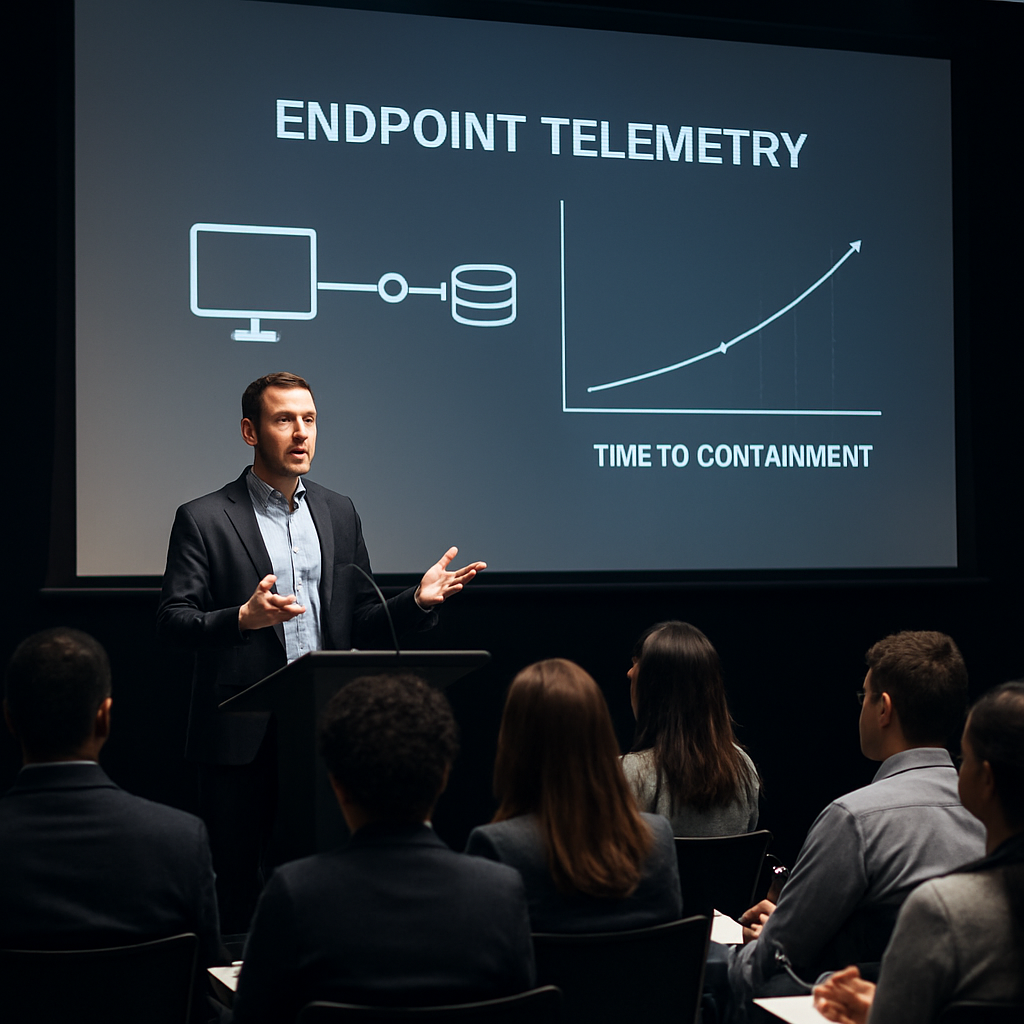
The core finding: a GW alumnus gave a pragmatic, operational presentation that favored measurable defensive controls and hands-on threat hunting over theoretical frameworks. In short, the talk moved the conversation from strategy to specific steps security teams can adopt within 30 days.
Why that matters: teams often debate high-level frameworks while attackers exploit low-hanging gaps. The alumnus framed detection and response as a sequence of rehearsable actions, not just policies.
What the alumnus presented and why it mattered
The presentation laid out three forward-looking priorities for defenders: instrument visibility, prioritize detections by impact, and rehearse response playbooks. Each priority came with a practical nugget. For visibility, the talk stressed collecting endpoint telemetry that can show process ancestry and command-line arguments. For prioritization, the alumnus recommended scoring alerts by likely business impact so analysts focus on incidents that matter. For rehearsal, the presenter argued that tabletop exercises and full runbooks must be executed regularly and measured, not just written down.
This is significant because many organizations still equate compliance checklists with real security. The alumnus made the case that compliance without repeatable detection and response is brittle. He also emphasized the human factor: experienced analysts paired with good telemetry outperform expensive automation when facing novel attack techniques.
In short, better logs, smarter triage, and practiced playbooks beat shiny but untested controls.
A concrete example: threat hunting in a mid-size hospital
Consider a 500-bed regional hospital that sees frequent phishing attempts. The alumnus used a scenario like this to show how the three priorities play out. First, the hospital ensured endpoints logged process start events and PowerShell command lines. That level of detail allowed analysts to spot a suspicious child process spawning netcat-style utilities.
Second, the hospital applied an impact-oriented filter: alerts tied to credentials, administrative tools, or EHR access pushed to the top of the queue. That reduced the analyst workload by focusing on incidents that could affect patient records or billing systems.
Third, the hospital ran a quarterly simulated credential compromise. The exercise revealed a gap: incident responders could contain a workstation but lacked an automated way to revoke sessions on the EHR. The runbook was updated to include an immediate service-account rotation step and a scripted EHR session termination, which was then tested in the next exercise.
Before these changes, phishing-response mean time to containment often exceeded 48 hours. After implementing focused logging, prioritized triage, and tested playbooks, mean time to containment fell below 12 hours in the simulated exercises. That before/after demonstrates how modest measurement and targeted changes deliver real risk reduction.
Trade-offs in tooling and staffing the SOC
The alumnus was explicit about trade-offs. More telemetry improves detection, but it also increases storage costs and analyst fatigue. Sending every Windows event to a central store can help spot lateral movement, yet it means higher ingestion bills and more false positives. There’s no one-size-fits-all; teams must decide where to invest based on what they want to detect.
Another trade-off involves automation. Automated response can contain threats faster, but overaggressive actions risk disrupting critical services. The alumnus recommended a graduated approach: start with passive automations such as enrichment and suggested actions, then progress to enforced containment for low-risk assets. That path reduces the chance of breaking production while still shortening reaction time.
Staffing trade-offs are equally real. Hiring senior threat hunters reduces time to detection, but experienced people command premium salaries and are scarce. The alumnus recommended mixing experience levels: senior staff should focus on designing detections and mentoring, while junior analysts handle triage workflows supported by clearly written playbooks.
The alumnus summarized these staffing and tooling trade-offs succinctly.
How to apply one technique this week
Pick one detection and make it actionable. The alumnus gave a step-by-step for turning a simple telemetry source into a high-value detection within seven days. Step 1: identify a high-impact asset class (for example, database servers or EHR systems). Step 2: enable process creation and command-line logging on those hosts. Step 3: write a detection rule that flags unusual parent-child process relationships or uncommon command-line switches. Step 4: route these alerts to a prioritized queue and assign a response owner. Step 5: run a tabletop that walks through containment and credential rotation.
This sequence is deliberately narrow. It focuses effort where it most reduces risk instead of chasing every possible signal at once. It also produces a measurable improvement: clearer alerts and a tested containment path.
A caveat: enabling detailed telemetry may violate local retention policies or increase storage costs. Measure the cost, keep the most relevant fields, and purge older data if necessary. Make sure legal and compliance teams are involved before you ramp up logging on systems that handle sensitive data.
Common follow-up questions readers have
Who should lead this change? The alumnus argued that security operations should lead detection engineering work with clear support from IT and application owners. The role is cross-functional, but operations must own day-to-day execution.
What metrics matter? Time to detection, time to containment, and percentage of alerts escalated to incident response are practical starting points. Those metrics tie effort to risk reduction and make trade-offs visible.
How do you avoid analyst burnout? Prioritize alerts by impact, automate enrichment (not enforcement) first, and rotate on-call responsibilities so the same analysts don't carry high-intensity shifts for months.
Actionable takeaway
This week, pick one business-critical asset group, enable targeted telemetry for it, and create a single prioritized detection routed to a named responder. Then run a 90-minute tabletop to rehearse containment and credential revocation. Repeat that cycle quarterly and measure how mean time to containment changes.
Spotted a mistake? Tell usand we'll correct it.
Related Articles

Network IP Ranges and Blocks Explained
Discover how network IP ranges and blocks work, why they're essential for cybersecurity, and real-world examples to help you manage your network better.

Proxy Networks and WAN Security: Risks and Precautions
Understand how a proxy approach works and why you need to be cautious when using proxy services. Learn from real-world examples and protect your data.

Public IP Security: A Practical Network Security Guide
Master public IP security with the latest trends, expert insights, and practical steps to protect your digital world in 2026.

What Is a Public IP Address? How to Find and Protect Yours
What a public IP address is, why it matters for privacy and security, and how to find and protect yours.