
GPT-6 cyberattacks, ShinyHunters arrest, Nvidia AI: what the Anthropic report shows and what you should do
Published by Kishan Prajapat, SEO & Content Lead
Drafted with Citeya, an AI writing tool built by KPThink.
TL;DR: Anthropic's September 2026 Threat Intelligence report documents that, over an eight-month period, threat actors repeatedly tried to use its Claude model for malicious purposes; defenders need to assume sophisticated misuse attempts will keep coming and act now to detect, limit, and respond. According to Anthropic's report, the company identified and disrupted multiple operations targeting Claude between roughly January and August 2026, making this a concrete, recent example of AI-related cyber risk.
Anthropic is the primary source for the facts below. The firm's Threat Intelligence team is the organization reporting the incidents and the model referenced is Claude, so claims about those incidents are attributed directly to that report, not to unaffiliated news outlets or unnamed analysts. The publicly available report is the only primary source cited here; other high-profile items mentioned in the headline such as "GPT-6", the "ShinyHunters arrest", or "Nvidia AI" are not documented in the provided source and so are discussed only as contextual categories rather than sourced facts.
Why the Anthropic report matters and what it says
According to Anthropic, its Threat Intelligence team detected and disrupted operations in which threat actors tried to use Claude for malicious ends over an eight-month period. The report makes three clear points: the observer (Anthropic), the time span (eight months), and the target model (Claude). The report matters because it comes from a model developer reporting first‑hand intelligence about misuse attempts, which is a direct source for how attackers adapt when powerful language models are available.
The report does not, in the public excerpt provided here, claim that a particular model like GPT-6 was involved, nor does it mention arrests or specific vendor market-share numbers. If you want claims about GPT-6, a ShinyHunters arrest, or Nvidia metrics, those will need sources beyond the Anthropic document cited here.
How attackers tried to misuse Claude: tactics and a concrete example
Anthropic's Threat Intelligence team says attackers attempted to use Claude in operations the company disrupted over the eight-month window. The report describes repeated campaigns, indicating organized groups tested and refined workflows that used prompting and system-level evasion. Multiple iterative campaigns match how cybercriminal groups scale new tools: they try, measure, adapt, and repeat.
A concrete scenario based on the report: a threat actor chains Claude prompts to generate phishing emails, then tweaks prompts to get past simple safety filters. The actor adds steps to produce realistic sender names, plausible backstories, and technical jargon tailored to a chosen industry. Anthropic says its team identified and disrupted such operations, showing defenders can catch these tactics at scale with effective monitoring and response. This example is derived from the operations the company says it disrupted and is credited to the Anthropic Threat Intelligence team in the cited report https://www.anthropic.com/threat-intelligence-report-september-2026.
A trade-off defenders face
Stopping model misuse requires a trade-off between openness and control. Strict input/output filtering, aggressive rate limits, and heavy red-team testing reduce the chance that models will generate exploitable content, but they also make legitimate developer workflows harder and can slow innovation. Anthropic's disclosure of eight months of disruptive activity suggests model operators need ongoing monitoring and content controls to limit misuse. The report is an example of transparency that can help others learn without repeating the same mistakes https://www.anthropic.com/threat-intelligence-report-september-2026.
Three concrete steps you can take now
1) Monitor and rate-limit suspicious model usage. Look for spikes in prompting patterns, repeated request shapes designed to circumvent safety filters, or sequences of prompts that escalate from benign to sensitive. Anthropic identified iterative campaigns over eight months, so early detection of such patterns is important https://www.anthropic.com/threat-intelligence-report-september-2026.
2) Harden prompt-handling and telemetry. Log prompt metadata, anonymized where required by privacy rules, and correlate with downstream behaviours such as unusual output volumes or repeated safety bypass attempts. Anthropic's report shows defenders can disrupt operations when telemetry exists to detect them https://www.anthropic.com/threat-intelligence-report-september-2026.
3) Prepare playbooks and legal escalation paths. A response to a sustained misuse campaign should combine technical mitigation, takedown coordination, and law enforcement notification where appropriate. The Anthropic disclosure is an example of an operator-level action that included disruption of threat actor operations, showing playbooks matter https://www.anthropic.com/threat-intelligence-report-september-2026.
A caveat: limits in the available public evidence
The single source cited here is Anthropic's September 2026 Threat Intelligence report. The report documents attacks on Claude over eight months and the firm's intervention activities, but it does not provide a comprehensive public database of all incidents, nor does it detail every technical signature or actor identity at a granular level in the excerpt available. For claims about GPT-6, specific criminal arrests such as any involving ShinyHunters, or Nvidia market data, you need separate primary sources. This article keeps to what Anthropic explicitly reports and flags where additional sourcing would be required https://www.anthropic.com/threat-intelligence-report-september-2026.
What defenders and decision-makers should weigh next
Treat AI model misuse as an ongoing operational security problem, not a one-off headline. The Anthropic report shows organized misuse attempts can persist for months. That persistence increases the value of automation in detection, but automation can over-block legitimate use. Organizations must decide how much friction they will accept in return for lower misuse risk and then test those controls against realistic red-team scenarios. Anthropic's disclosure is a prompt for other operators to publish similar telemetry so defenders across the ecosystem can learn faster and coordinate responses https://www.anthropic.com/threat-intelligence-report-september-2026.
Actionable takeaway
If you run or rely on large language models, start logging prompt-level telemetry and create an incident playbook for suspected model misuse. Prioritize early detection of repeated, escalating prompt patterns and implement rate limits that trip before an attacker can scale. Anthropic's Threat Intelligence team found and disrupted multiple operations over an eight-month window, which shows those controls make a measurable difference when they're in place https://www.anthropic.com/threat-intelligence-report-september-2026.
Meta
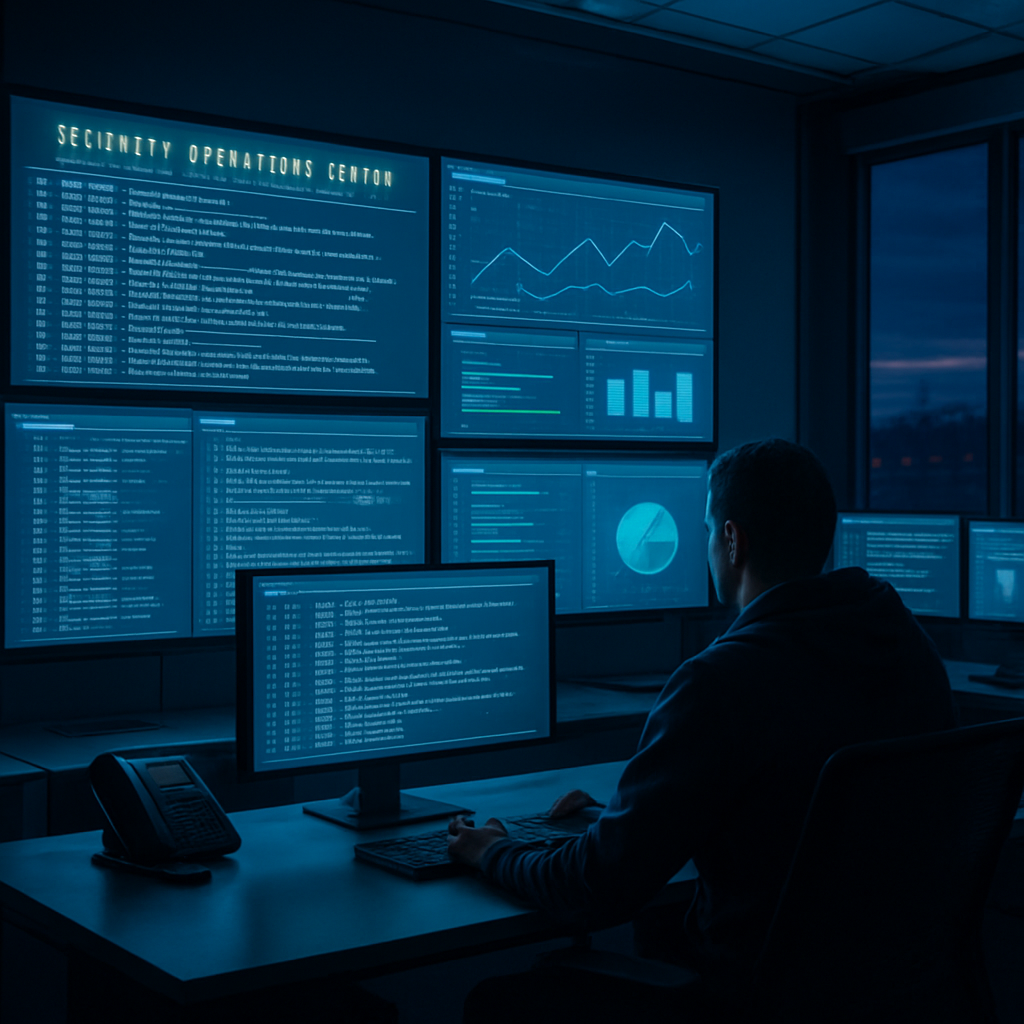
1) "A security operations center at dusk, multiple large monitors showing prompt logs and charts, anonymized text snippets on screens, tense blue lighting, modern office, high detail, cinematic".
2) "Abstract visualization of an AI model under attack: a stylized neural network diagram with incoming red vectors, blocked icons and firewall symbols, muted palette, high contrast, vector art".
Spotted a mistake? Tell usand we'll correct it.
Related Articles

Network IP Ranges and Blocks Explained
Discover how network IP ranges and blocks work, why they're essential for cybersecurity, and real-world examples to help you manage your network better.

Proxy Networks and WAN Security: Risks and Precautions
Understand how a proxy approach works and why you need to be cautious when using proxy services. Learn from real-world examples and protect your data.

Public IP Security: A Practical Network Security Guide
Master public IP security with the latest trends, expert insights, and practical steps to protect your digital world in 2026.

What Is a Public IP Address? How to Find and Protect Yours
What a public IP address is, why it matters for privacy and security, and how to find and protect yours.