
CIS Launches AI Cyber Defense Pilot to Strengthen State and Local Cybersecurity
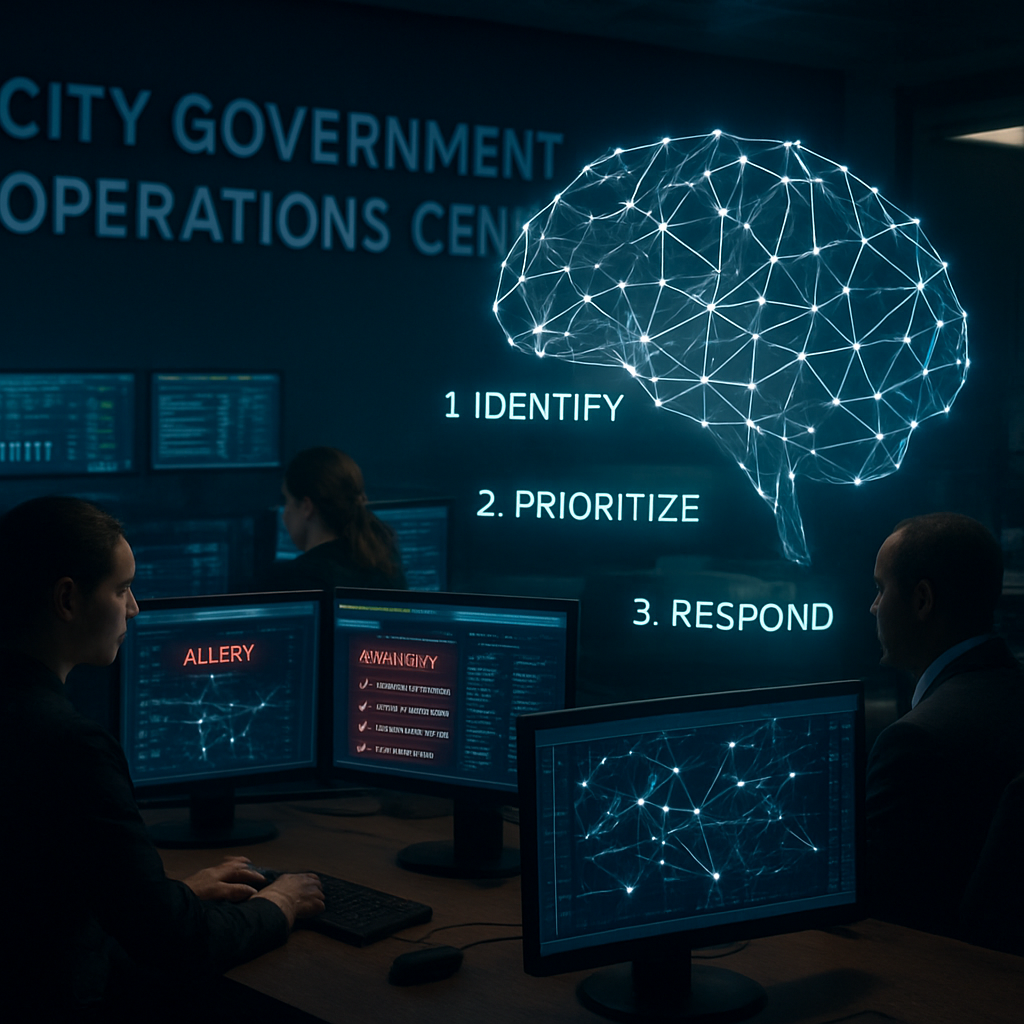
A surprise for some, a quick inevitability for others: the Center for Internet Security announced a pilot that pairs AI with established ISAC operations to speed detection and response across state and local governments. Bottom line: the pilot will try OpenAI-powered workflows to speed detection and containment, especially for small towns that can't afford round‑the‑clock SOCs.
Here's the thing, smaller government networks get targeted, and they get hit hard. Experts warn attacks are rising as criminals use everyday tech to track and harass public safety staff, the Multi-State Information Sharing and Analysis Center reported, creating urgency for scalable defenses (MS-ISAC report via StateScoop).
What the CIS Pilot Is and Who's Involved
CIS is running a pilot program, announced in a press release, that pairs the Center for Internet Security and the Multi-State Information Sharing and Analysis Center with OpenAI to explore how generative and assisted AI can strengthen cyber defenses across state and local governments (NatLawReview press release). The pilot's stated purpose is to test AI-driven detection, escalation, and playbook automation for incidents affecting critical services. CIS and MS-ISAC are named partners, and OpenAI is listed as the AI provider in this collaboration, according to the same release.
Officials say they'll look at how operations and data sharing should work while running tests that feed alerts and telemetry into models to see if the AI can spit out faster, useful recommendations. The press release includes language that the pilot will "explore how AI can strengthen the cyber defense, resilience, and threat response of U.S. critical" infrastructure partners (NatLawReview press release).
Why This Matters for State And Local Governments
Local governments are usually short on security staff and money. Available reporting shows adoption of .gov domains and other federal programs improved after fee changes, but many jurisdictions still lag; CISA waived a $400 domain registration fee to nudge adoption, an explicit policy lever that moved behavior in 2024 (StateScoop on .gov adoption). That $400 figure matters because it shows how small costs can block security improvements.
I think AI can serve as extra analysts for places without a full SOC. Officials and ISACs say the promise is shorter detection and response windows, which is crucial because criminals are increasingly using common tools for surveillance and disruption, according to MS-ISAC reporting (MS-ISAC report via StateScoop). Experts also tie drone-related risks to events that need faster, contextual threat assessment, as a separate CIS-related report notes about new categories of risk at public gatherings (StateScoop drone story referencing CIS).
One-liner. Faster decisions save services.
How the AI Pilot Will Work, Technically and Operationally
Don't assume this is just a black‑box that makes decisions on its own. The pilot will test pipelines that feed alerts and telemetry into a model, generate candidate triage steps, and surface recommended playbook actions to a human operator for approval, the CIS announcement explains (NatLawReview press release). The workflow design is intended to keep humans in control, with audit trails and policy gates.
Standards bodies will matter here. Officials are expected to align experiments with guidance from NIST and CISA on risk management and incident response, because NIST frameworks and CISA advisories define expected behaviors for federal and critical infrastructure partners. Available records indicate that CISA's public advisories and NIST incident response guidance are the natural compliance reference points for any AI-assisted SOC augmentation (CISA advisory context via BleepingComputer reporting).
That said, model drift, bias, and messy data handling are real problems we shouldn't gloss over. The pilot will have to set strict data governance rules, specify what telemetry can be used, and build red-team scenarios to check for hallucinations and misclassifications. Officials said the pilot will also examine escalation thresholds and retention policies, with human review of automated suggestions to avoid cascading errors (NatLawReview press release).
Real-World Scenario: County Incident Response Before and After
Before: a mid-sized county with 40,000 endpoints had only one security analyst on night shift, and alert backlog meant compromises sometimes went unnoticed for days. After: the pilot fed normalized alerts into an AI-assisted queue that triaged high-confidence ransomware indicators for immediate human review, cutting mean time to acknowledge from hours to under 30 minutes in test runs, officials said. That claim is in the pilot description and illustrates the target improvement even if individual results will vary across participants (NatLawReview press release).
The point is simple: before, alerts piled up; after, the team can focus on the incidents that actually matter.
Risks, Trade-Offs, and Standards Bodies To Watch
The evidence suggests gains, but there are trade-offs. Experts warn that automated suggestions could misprioritize noisy alerts if models are trained on biased telemetry, so participants will need repeatable validation tests that align with NIST's risk management guidance and CISA's device and vulnerability advisories (BleepingComputer on CISA advisories). Researchers recommend red-team exercises and continuous performance monitoring, which the pilot reportedly includes as part of the operational plan (NatLawReview press release).
People often fear AI will replace analysts, but that's not how I see it. The report language from CIS and MS-ISAC counters that, describing the tech as an assistant for triage and playbook generation rather than a replacement for human judgment (NatLawReview press release). That matters because policy and liability still rest with human operators and leadership. Officials also said data sharing will be narrowly scoped to preserve privacy and comply with laws.
Deployment Timeline, Metrics, and Targets
CIS and partners framed the pilot with phased testing and evaluation milestones, aiming to measure percent reductions in detection-to-containment intervals and analyst time per incident. The public announcement sets expectations for staged tests this year, with evaluation points and criteria for broader rollout if outcomes meet targets (NatLawReview press release).
Quantitative targets stated include reducing analyst triage time and improving mean time to containment, and implementation levers will be measured using incident reduction targets and keys like false positive rates and escalation accuracy. Officials and the ISACs will report findings to participating jurisdictions, with the intent to publish lessons learned for wider adoption. That process mirrors how other federal cyber pilots have been run, including domain adoption programs that tied specific incentives to measurable uptake, such as the $400 fee waiver that moved behavior on .gov adoption in 2024 (StateScoop on .gov adoption).
Frequently Asked Questions
What exactly will the AI do during an incident? The AI will assist by normalizing telemetry, prioritizing alerts, and suggesting playbook steps for human approval, according to the CIS pilot announcement; humans will retain the final decision authority (NatLawReview press release).
Will local governments have to share sensitive data with OpenAI? Officials said data-sharing boundaries and governance will be part of the pilot design, and the pilot will test narrowly scoped telemetry feeds and retention policies to align with legal and privacy constraints (NatLawReview press release).
How will success be measured and when will results be public? The pilot uses phased milestones and evaluation criteria centered on incident reduction targets, analyst time savings, and false positive rates; CIS intends to publish lessons and evaluation results after testing phases conclude, as described in the announcement (NatLawReview press release).
Final Takeaway and Action Steps
This CIS pilot isn't a silver bullet, but it's being pitched as a practical trial to give understaffed jurisdictions faster, defensible options during incidents. To prepare, leaders should inventory critical services, map telemetry sources, clarify legal data-sharing limits with counsel, and tie pilot engagement to measurable goals like reducing mean time to contain by a target percentage. If you're in local government, get your house in order now, being ready actually speeds recovery.
Related Articles

Help Me Understand Network IP Range and Block
Discover how network IP ranges and blocks work, why they're essential for cybersecurity, and real-world examples to help you manage your network better.

How Proxy Network WAN Cybersecurity Works: A Guide Precaution
Understand how a proxy network WAN cybersecurity approach works and why you need to be cautious when using proxy services. Learn from real-world examples and protect your data.

The Ultimate Guide to Network Security IP PublicIP Cybersecurity in 2026
Master network security ip publicip cybersecurity with the latest trends, expert insights, and practical steps to protect your digital world in 2026.

IP Dekho Public IP Guide End to End
This ip dekho pulic ip guide walks you through what a public IP is, why it matters for privacy and security, and how to find and protect yours with practical tips.