
60 Minutes Transcript: Artificial intelligence and the future of work and culture
Published by Kishan Prajapat, SEO & Content Lead
Drafted with Citeya, an AI writing tool built by KPThink.
AI is changing what people do every day, and 60 Minutes shows that change will be uneven: some jobs will be reconfigured, some industries will be remade, and some human skills will be more valuable than ever. In short, AI will automate specific tasks quickly, reshape industries over time, and increase the value of emotional and contextual skills that machines can't easily copy.
The CBS program "60 Minutes" ran several segments that made a single point: artificial intelligence is both a tool and a disruptor. The show asked whether AI will replace jobs, how it can restore priceless art and architecture, and how companies and governments are responding to rapid change. The program spoke to tech developers and corporate leaders about jobs and business, and it included case studies in art restoration and employment strategy (CBS News transcript on AI and work, CBS News on AI trained for careers).
How 60 Minutes framed AI's impact on jobs
60 Minutes gave viewers a clear line: AI is being taught to do discrete tasks that once required human attention. The segment on careers described a growing industry dedicated to training AI systems on job-specific tasks, arguing that many workplace functions will change rather than vanish overnight (CBS News). The program contrasted that with firms betting on human skills they think AI can't replace: for example, Ernst & Young announced it will award $100 million in bonuses to employees who show people skills, a direct corporate bet on human interaction surviving automation (CBS News on Ernst & Young).
When AI helps preservation and science
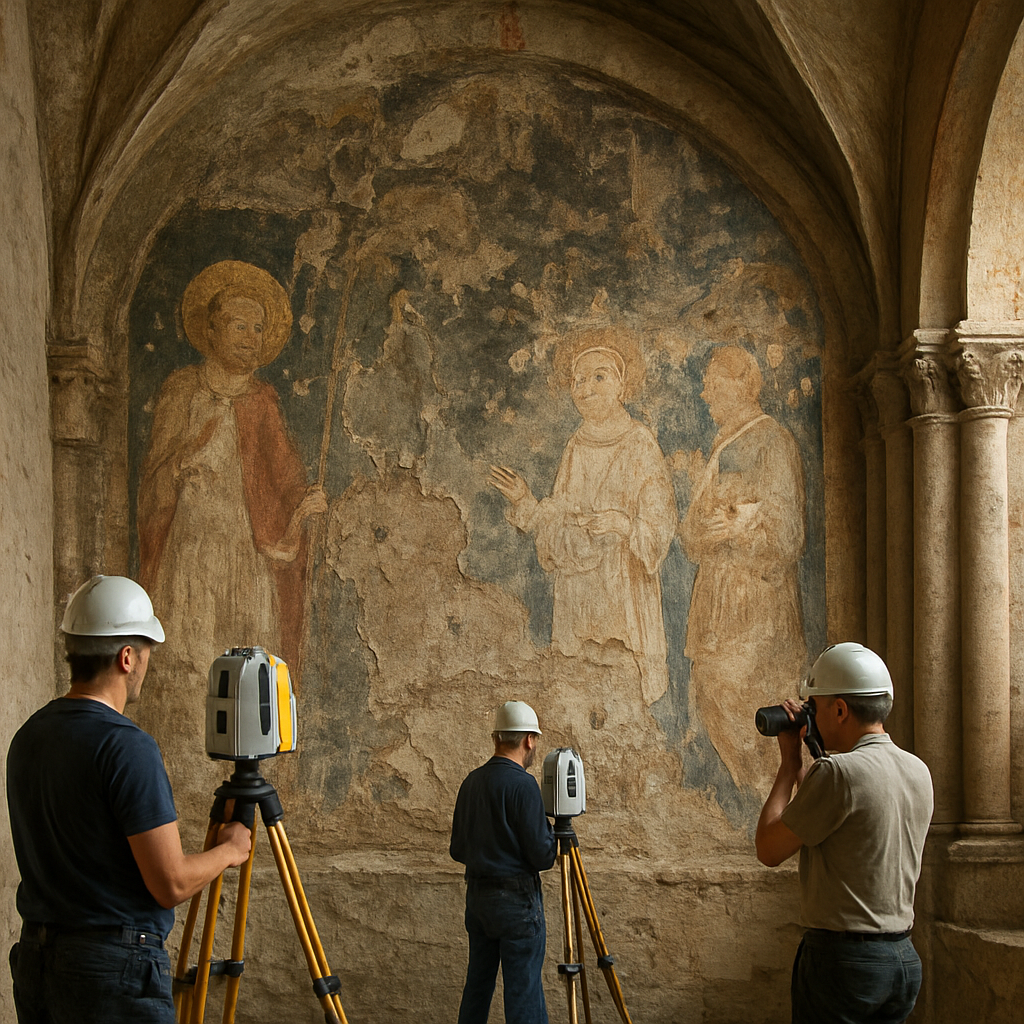
The show turned to an unexpected application: cultural preservation. Friars and engineers used lasers, gigapixel cameras, and machine learning to rebuild missing frescoes and document damage suffered in two 1997 earthquakes at the Basilica of Saint Francis of Assisi in Italy, producing a digital record that helps guide physical restoration (CBS News transcript on the Basilica; CBS News digital preservation article).
The piece demonstrated a practical method: combine high-resolution imaging with AI-based stitching and expert input. That mix speeds work and preserves fragile details, yet it still requires human art historians to interpret style, pigment, and historic technique. The story is a practical demonstration of a broader pattern: machines accelerate data processing; humans keep interpretation authority (CBS News digital preservation article).
AI entering art and museums
60 Minutes also looked at AI in the creative world, where algorithms now contribute to works sold in auction houses and exhibited in museums. The segment presented both commercial success and sharp criticism, including ethical disputes about authorship and provenance (CBS News on AI art). That coverage stressed a contrast: before AI, a work's creativity was strictly human; after AI, creativity can be a human-plus-tool collaboration where markets and collectors decide value.
Who owns the results when software generates imagery from a dataset of other artists? 60 Minutes left viewers with both market evidence and moral unease, showing that legal and cultural frameworks lag behind technological capability (CBS News on AI art).
The trade-offs: speed, skill loss, and market power
Speed matters. AWS's machine-learning team shows that video intelligence can answer natural-language questions about uploaded videos within seconds, a technical benchmark that transforms workflows in media and compliance but also compresses time available for human review (AWS blog).
Market power matters. A recent CBS News report highlighted a lawsuit alleging that four leading AI companies, Anthropic, OpenAI, SpaceXAI, and Google, coordinated slowdown efforts in a way the plaintiffs say violated antitrust law; the story illustrates how industry dynamics, not just technology, will shape access to capabilities (CBS News lawsuit coverage).
Skill loss matters. The Ernst & Young move to pay $100 million in bonuses for interpersonal skills shows a corporate response to that risk: firms can push back by rewarding skills that currently resist automation (CBS News on Ernst & Young). Those are concrete choices employers are making today.
A concrete example: restoring the Basilica of Saint Francis
The Basilica project is the program's clearest real-world example. After two earthquakes in 1997 damaged the 13th-century church, friars worked with engineers to make gigapixel scans, laser maps, and AI-enabled reconstructions to map losses and guide repairs (CBS News restoration transcript; CBS News digital preservation).
The example shows a practical sequence to follow: capture detailed digital data, apply algorithmic stitching or predictive fills to reconstruct missing pieces, then bring in domain experts to validate or correct the output. Machines speed the draft. Humans supply judgment.
What you should do next (one immediate step)
If you work in an industry facing automation, map three routine weekly tasks and identify which could be performed by an AI model within seconds. Use that list to start retraining or reallocating time toward tasks that require human judgment, client relationships, or context sensitivity. The 60 Minutes coverage and the corporate responses it reported show companies already paying to keep those human skills alive (CBS News on AI and work; CBS News on Ernst & Young).
One caveat: technologies and markets change quickly. The 60 Minutes segments present snapshots and named parties, but legal disputes and standards are still forming, as the lawsuit over coordinated slowdowns illustrates (CBS News lawsuit coverage). That means your plan should be iterative, not fixed.
Frequently Asked Questions
Q: Will AI take my job entirely? A: The 60 Minutes reporting indicates AI will automate many specific tasks, but entire occupations are less often eliminated overnight; firms like Ernst & Young are betting on interpersonal skills that remain hard to automate (CBS News on careers; CBS News on Ernst & Young).
Q: Are there examples where AI clearly helps people? A: Yes. The Basilica restoration used gigapixel imaging and AI to reconstruct damaged frescoes after the 1997 earthquakes, speeding work while keeping experts in the loop (CBS News restoration transcript; CBS News digital preservation).
Image prompts
1) A high-resolution gigapixel scan of a damaged 13th-century fresco in an Italian basilica, with laser mapping devices and engineers photographing details, natural light, documentary style.
2) A newsroom scene: a TV studio desk with a laptop showing a cascading code output, a producer and an art historian discussing a digital reconstruction on a large monitor, cinematic lighting.
seo.meta_title: "60 Minutes Transcript: Artificial intelligence and the future of work and culture"
seo.meta_description: "Read a focused analysis of 60 Minutes segments on AI's effects on jobs, art, and preservation, with a concrete step you can take today."
Spotted a mistake? Tell usand we'll correct it.
Related Articles

Network IP Ranges and Blocks Explained
Discover how network IP ranges and blocks work, why they're essential for cybersecurity, and real-world examples to help you manage your network better.

Proxy Networks and WAN Security: Risks and Precautions
Understand how a proxy approach works and why you need to be cautious when using proxy services. Learn from real-world examples and protect your data.

Public IP Security: A Practical Network Security Guide
Master public IP security with the latest trends, expert insights, and practical steps to protect your digital world in 2026.

What Is a Public IP Address? How to Find and Protect Yours
What a public IP address is, why it matters for privacy and security, and how to find and protect yours.